

Step 1 · for both partners
The fertility work-up
Understanding the cause before treating anything: ultrasound, hormone testing and semen analysis, followed by a joint consultation to go through every result.
Complete fertility care, in one place, from a team that knows you.
The right time
Many couples wait years before speaking to a doctor. Time matters: the earlier the work-up, the more options remain, and the simpler they are.
months of trying
A year of regular intercourse without contraception and no pregnancy: it's time for a work-up, for both partners.
months after 35
After 35, ovarian reserve declines faster. Waiting a full twelve months is no longer the advice.
waiting time
Very irregular or absent periods, significant pelvic pain, previous pelvic surgery or infection: come in now.
From your first consultation to advanced follow-up, every step happens here, in a discreet and welcoming setting.
Step 1 · for both partners
Understanding the cause before treating anything: ultrasound, hormone testing and semen analysis, followed by a joint consultation to go through every result.

First-line treatment
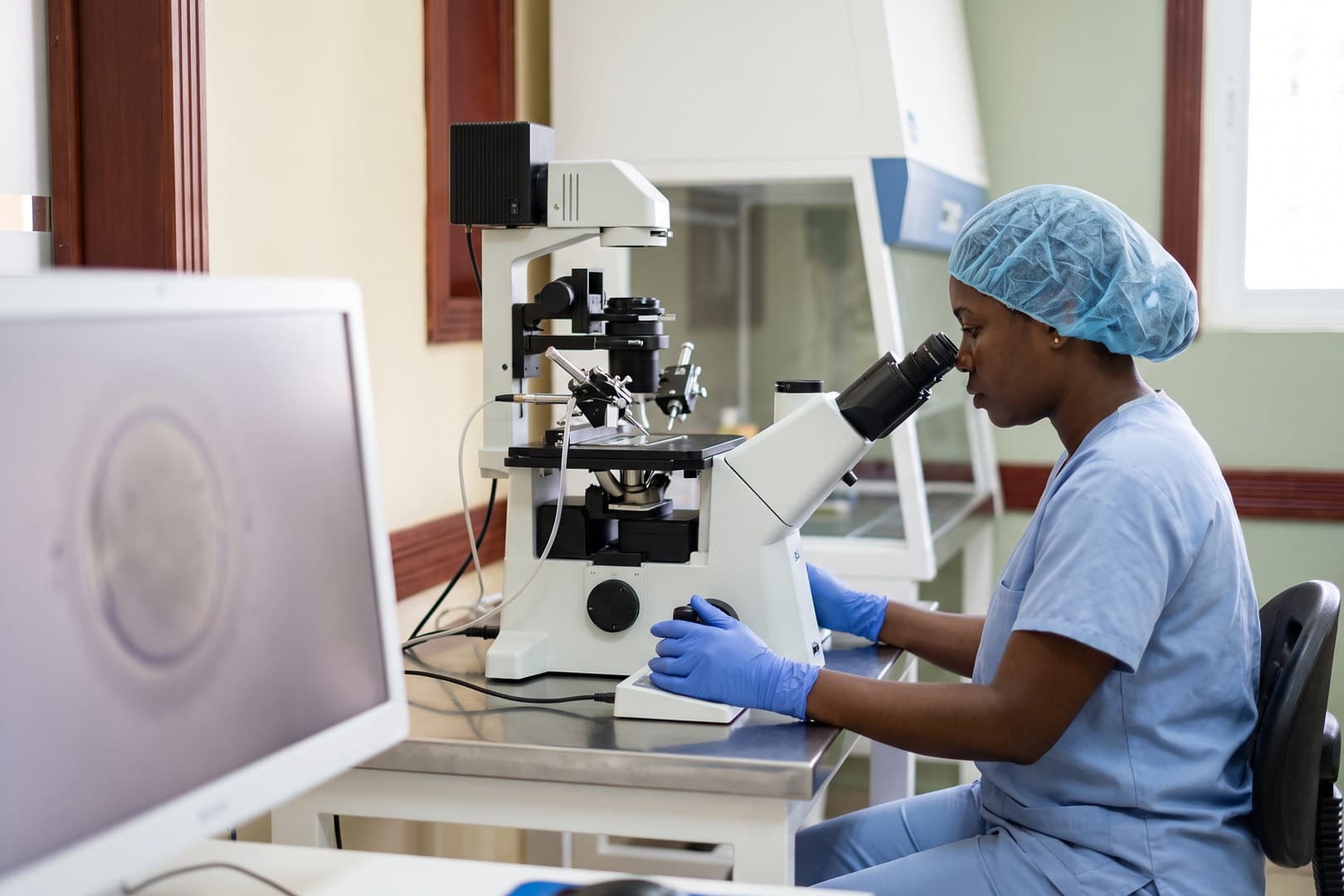
The simplest technique: we support ovulation, then place laboratory-prepared sperm directly into the uterus at the right moment. No anaesthesia.
Second-line treatment
Egg and sperm meet in the laboratory, and the resulting embryo is transferred into the uterus. Remaining embryos can be frozen for a later attempt.
Planning ahead
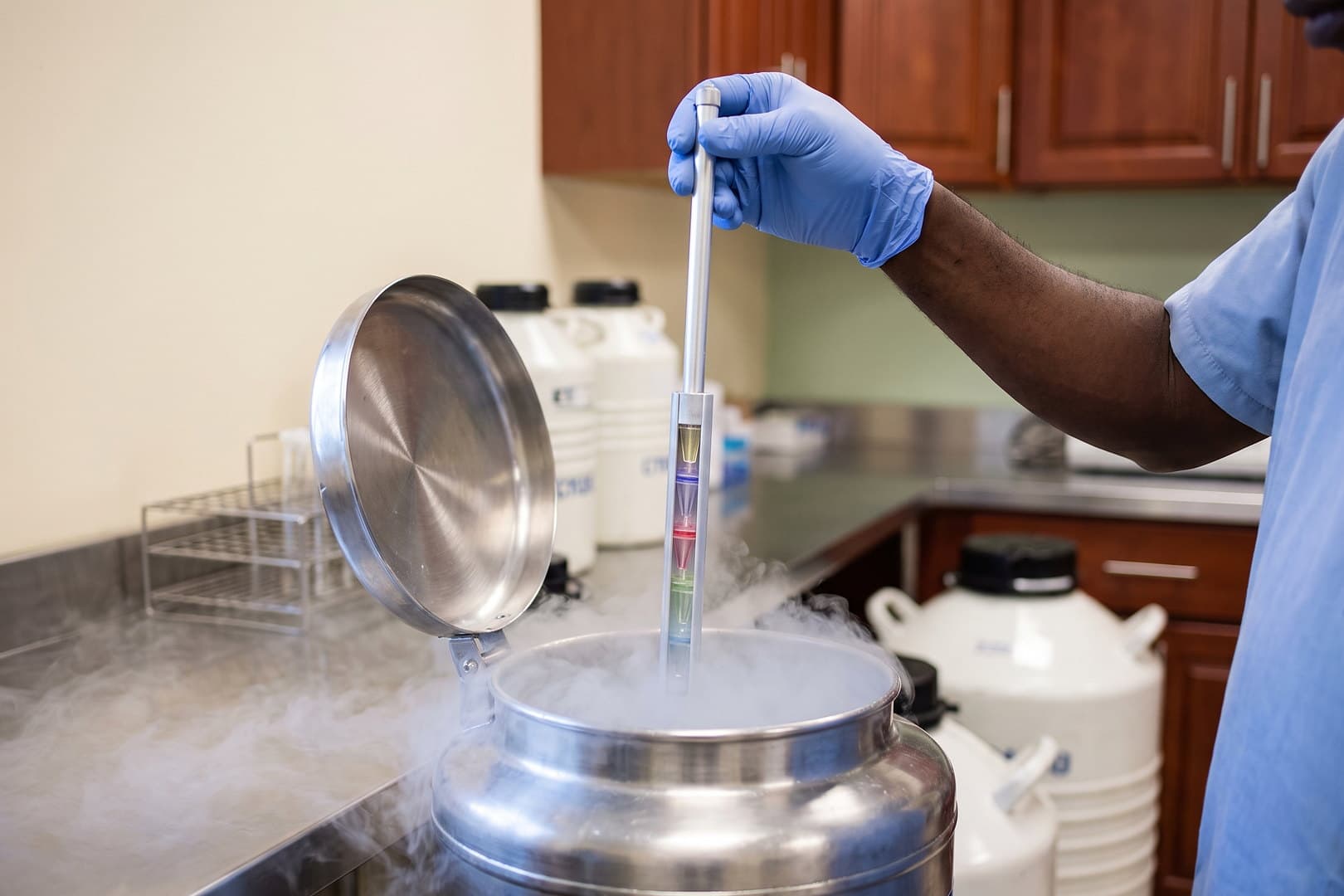
Storing eggs or sperm for a future pregnancy, or ahead of treatment that may affect fertility.

A page of its own
A male factor is involved in roughly half of all cases. Semen analysis is the simplest and fastest test in the work-up — which is why we order it among the first, not as a last resort.
The pathway
Nobody should discover the steps one at a time. Here is what lies ahead, in order, with realistic timings.
We see the couple together: history, examination, and the work-up prescription. Bring any test you have already had, however old.
Tests depend on specific points in the cycle, which is why this takes time. We go through every result with you in person — not by phone, not by message.
Your file is discussed by the team. We present the recommended option, its realistic chances in your situation, what it demands and what it costs in full. You decide afterwards, with no time pressure.
Daily injections at home, with several checks at the institute to adjust doses and set the date of the procedure.
Depending on the technique: sperm placement, egg retrieval under sedation, or embryo transfer. You go home the same day.
These are often the hardest two weeks of the whole pathway. We offer a support consultation during this period, whatever the outcome.
Understanding
The share of people of reproductive age affected by infertility during their lifetime, worldwide. It is neither rare nor shameful.
World Health Organization, 2023
Of cases involve a male factor, alone or alongside a female one. The male work-up is never an afterthought.
International clinical data
The number of causes of infertility that come down to fault, punishment or a curse. Infertility is a medical question, one that can be diagnosed and often treated.
Our clinical position
In many families, the absence of a child is explained by something other than medicine, and the blame almost always falls on the woman. We hear this in every consultation. Our role is not to tell you what to believe: it is to give you a precise diagnosis, so that you know what is actually happening in your body. You are welcome to come alone for a first conversation, before telling anyone.
Support
This is the part clinics never write about, because it sells nothing. It is also the part our patients raise most often.
Treatment shapes your days, your travel and your calendar. We explain in advance what it demands, so you can prepare for it.
Both partners experience this differently and at different speeds. We see couples together to talk it through, with no medical agenda.
Family, church, work. You owe no one an explanation, and we help you decide who to tell what.
A negative test is a bereavement, even if nobody around you sees it that way. We always see you again to go through the cycle step by step.
No doctor will ever tell you it is over — the decision is yours. If you want to talk about it, we will take the time, even if it means ending your care with us.
Common questions
We call you back within 48 working hours. You are welcome to come alone for a first conversation, before telling anyone.