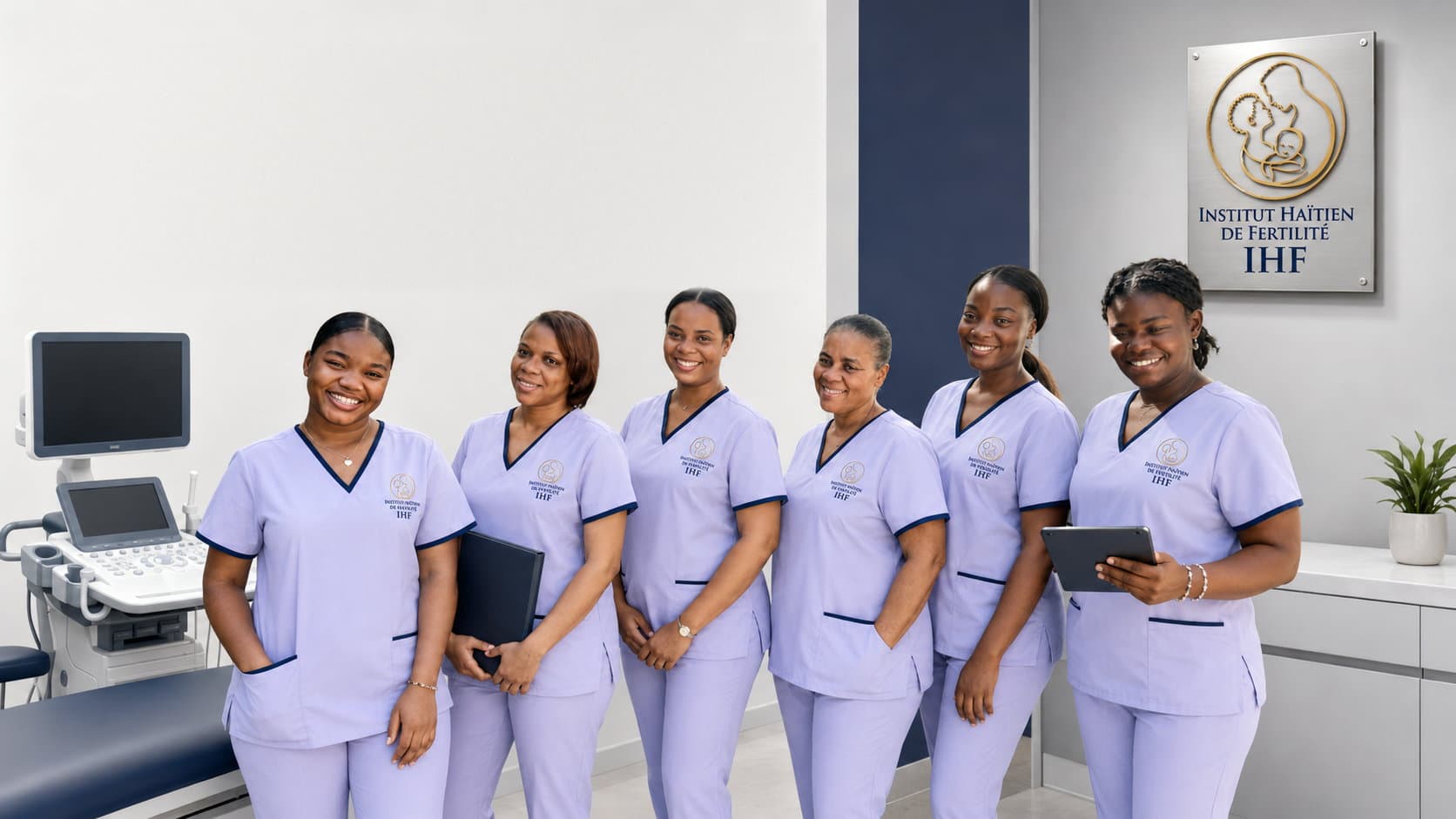
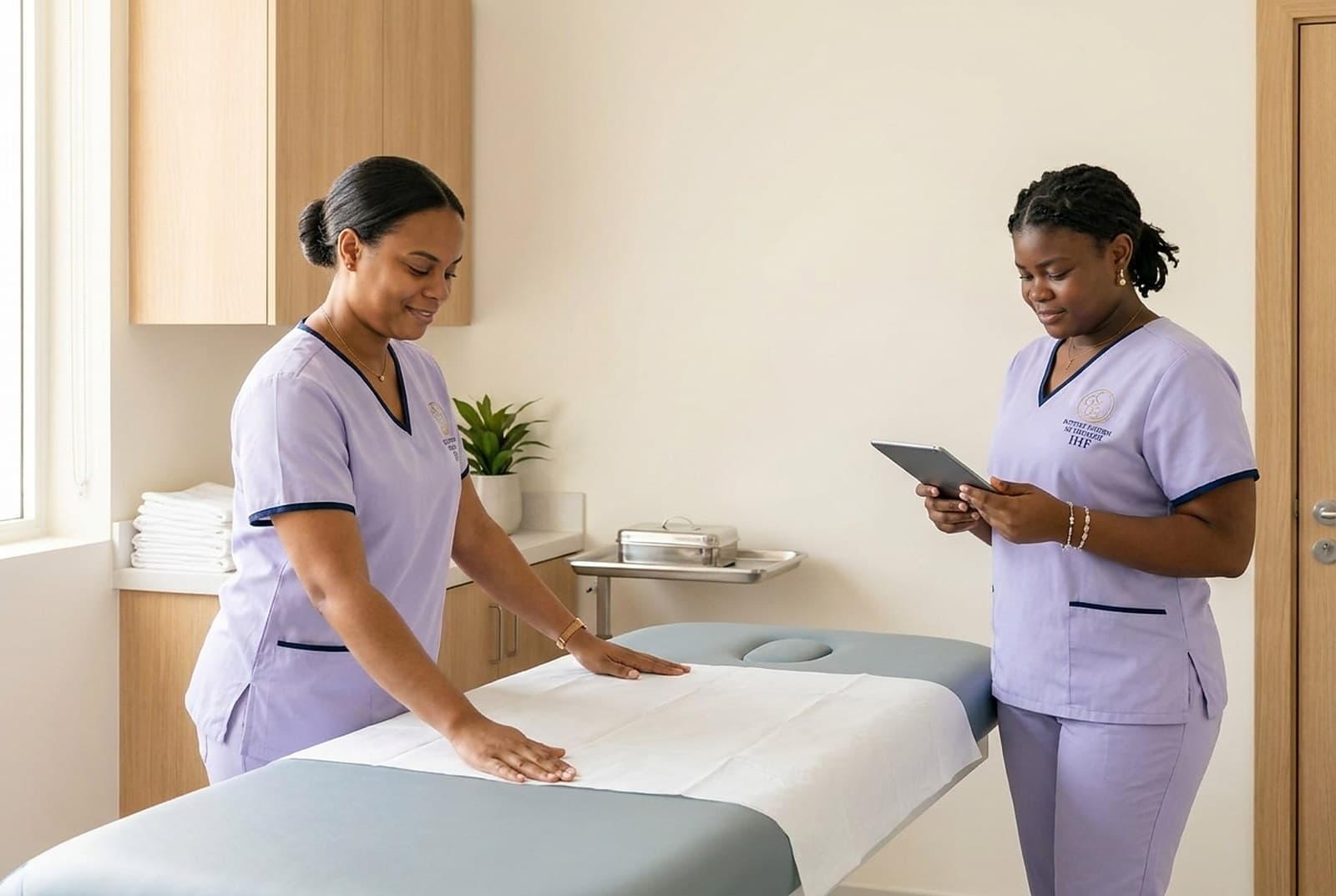
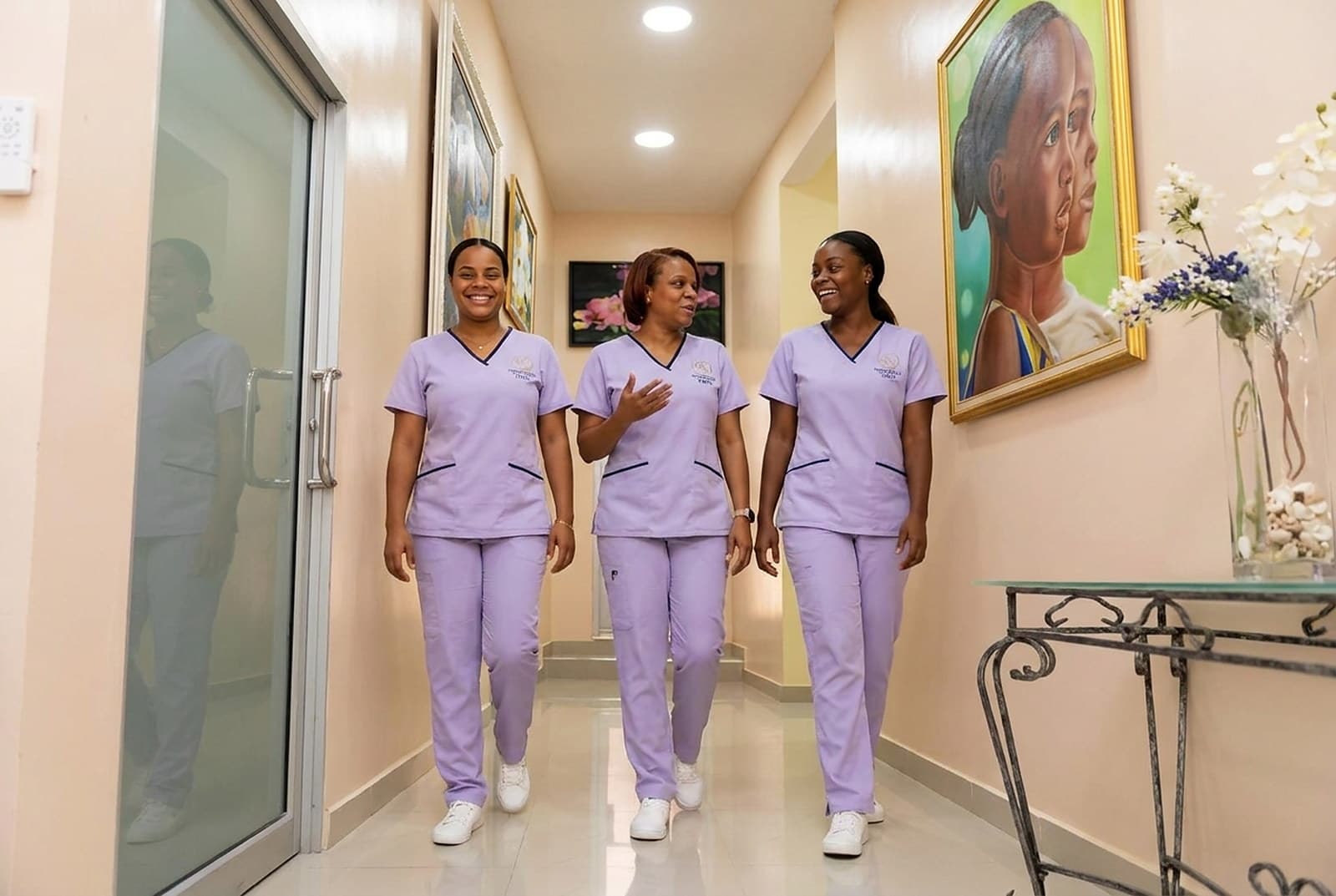
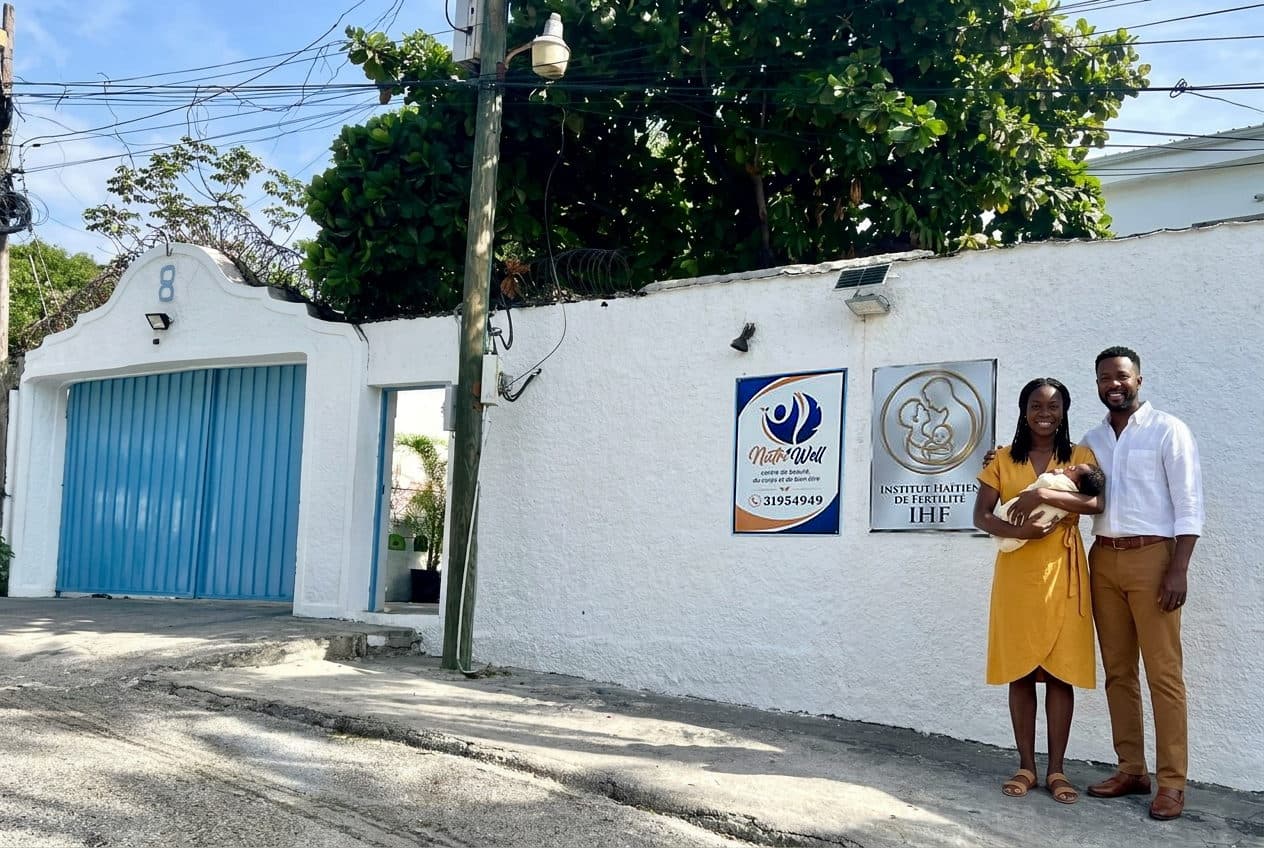
That first step taught me what had to be built next. It proved that high-level care was possible here, but it also showed me everything that remained to be built: a new generation of technical facilities, a genuine training structure, a research capacity, and an ambition that reaches beyond the walls of a single establishment. The Institut Haïtien de Fertilité grew out of that assessment. It is a new institution, designed from the outset to go further, and organised around four commitments: to treat, to train, to innovate, to pass on.
To treat, first. Reproductive medicine is a continuum, never a sequence of isolated techniques. We never steer a couple toward a heavier treatment than their file justifies: rigour lies as much in knowing what to propose as in knowing when to hold back.
To innovate, next, in the most demanding sense of the word. Innovation is not measured by the purchase of equipment, but by the consistency of procedures, the quality of the laboratory and the honesty of the results published. A technique has value only if it is mastered, documented and reproducible. It is that culture of quality, more than any machine, that separates a department from an institution.
To train, finally — and this is perhaps what gives the whole undertaking its real meaning. An institution that keeps its knowledge to itself builds nothing that lasts. As early as 2010, I brought together a group of young Haitian obstetrician-gynecologists and had them trained in Haiti; they are today among the country's specialists. I have also been teaching for more than thirty years, at the National School of Nursing, at the medical faculty of Université Notre-Dame d'Haïti where I chair the department of gynecology, and at Duke University's Global Health Institute. We want these skills not to stay concentrated in the capital, but to reach the country's other departments over time.
A country is not built by its infrastructure alone: it is also built by its scientific institutions. I have already seen what organised competence can produce here, and what we accomplished once was no accident. Training a young professional in Haiti is an investment in our collective future. Keeping specialist skills within the country is a form of national resilience.
That ambition would mean nothing without an equal ethical demand. In a field this intimate, trust always comes before technique: clear information, genuinely informed consent, unfailing confidentiality, respect for each person's convictions, and honesty about what medicine can — and cannot — guarantee. No centre anywhere promises an outcome. What we can promise is rigorous reasoning, clear explanations and loyal support, including when the road is longer than expected. Technology must never make the human disappear: it must serve them.
That is why I am addressing several audiences at once here. To couples: you are received as a singular story, never as a file. To health professionals: this house is yours too, as a place of training, exchange and research. To national institutions and international partners: we believe in collaborations built over time. To the Haitian diaspora: your country is now developing skills that once had to be sought elsewhere. And to young doctors, nurses, midwives and researchers: there is a demanding, useful and deeply human field here, and it needs you.
We chose to make possible, here in Haiti, what too many families believed they had to seek elsewhere. Our responsibility does not stop at technology; it begins with the trust placed in us.